
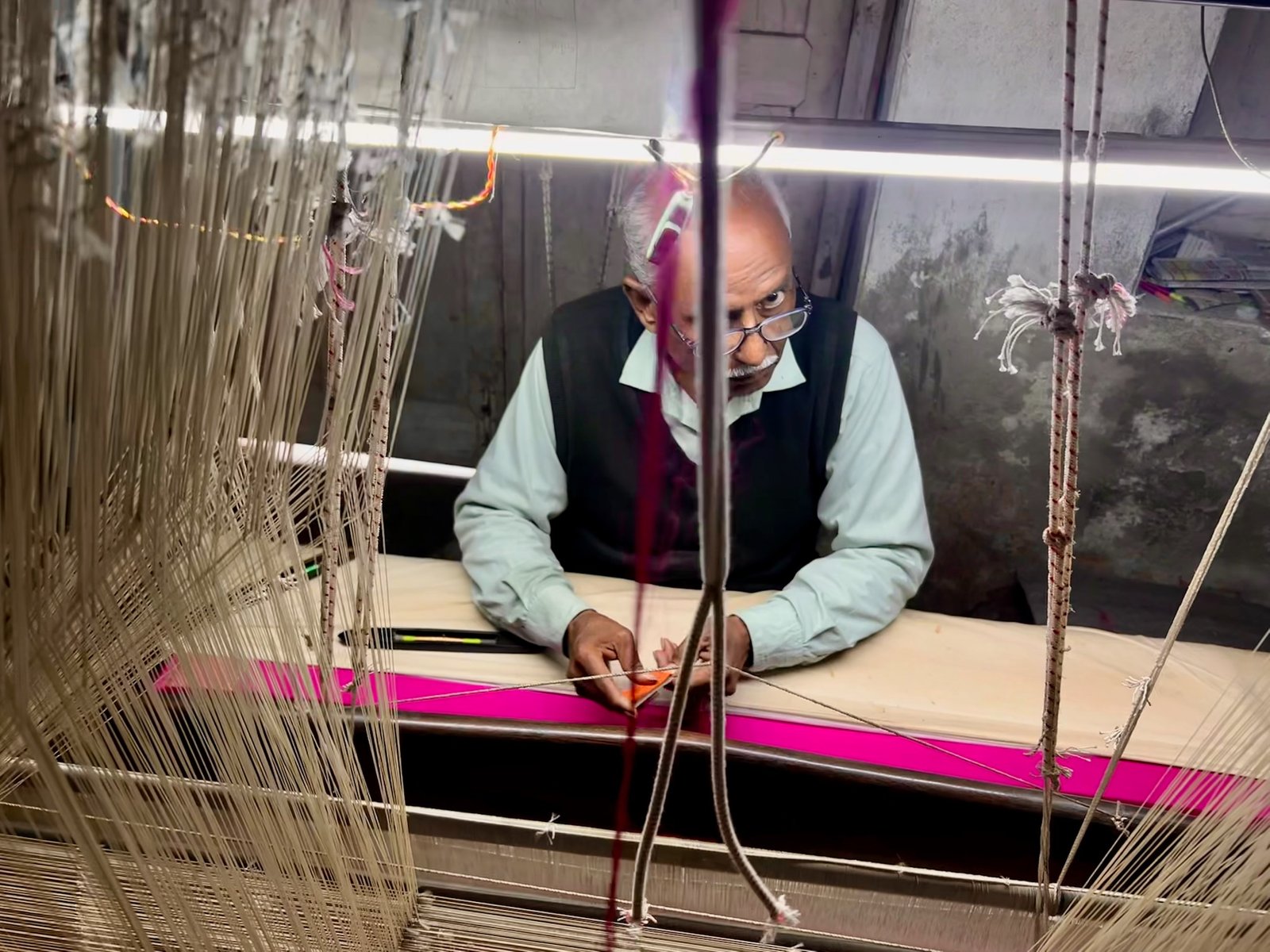
In Varanasi, handloom is often introduced too quickly.
A traveler is taken to a workshop, shown a few saris, told something about tradition, and then quietly steered toward the act of buying. None of that is entirely false. Banarasi weaving is deeply linked to fabric, commerce, inheritance, and livelihood. But when handloom is approached only as a shopping opportunity, something essential is missed.
The loom is not only a source of product. It is a place where time becomes visible.

A Loom Is a Rhythm Before It Is a Commodity
To stand near a loom with patience is to realize how much of weaving is rhythm rather than display. Hands move, thread answers, feet coordinate, the frame holds tension, pattern emerges in stages rather than all at once. The work is not dramatic. It is cumulative. And that is exactly why it deserves more attention than it usually receives.
Many visitors admire the finished textile without truly seeing the labor that made it possible. The shimmer of silk can distract from the quiet discipline beneath it. But if you slow down, the loom begins to reveal another kind of beauty: one built not only from ornament, but from endurance, memory, and trained precision.
Why “Heritage” Should Mean Something More
We often call weaving a heritage craft, but the word heritage becomes empty if it only means old. Banarasi handloom is heritage because it continues to live through people. It survives through transmission: a technique learned from an elder, an eye trained over years, a pattern understood by practice rather than by theory alone.
That is why the workshop matters. It lets a traveler see not just an item for sale, but a living chain of skill. The loom is where cultural continuity stops being abstract. Here it has sound, posture, strain, interruption, and pride. It also has fragility. Like many craft traditions, it lives under economic pressure, changing tastes, middlemen, imitation, and the constant demand to produce faster than the soul of the work may comfortably allow.
To understand handloom in Varanasi is to hold both truths together: beauty and pressure, continuity and vulnerability.
How to Enter a Weaving Space Well
A weaving visit becomes richer when the traveler arrives with a different intention. Instead of asking first what something costs, it helps to ask how long it takes, how a pattern is built, how the family entered the craft, what has changed in recent years, and what part of the process demands the most skill. These questions shift the encounter immediately.
They also change the dignity of the conversation. The artisan is no longer reduced to someone displaying inventory. He or she becomes what they actually are: a bearer of a difficult and highly refined knowledge system.
Shopping Is Not Wrong. Reduction Is.
There is nothing wrong with buying handloom. In fact, buying carefully and responsibly can be one way of honoring the work. The problem begins when purchase becomes the only lens through which the craft is seen.
When that happens, texture collapses into price. Labor becomes background. Knowledge becomes sales pitch. The relationship between the city and its weaving heritage is flattened into a transaction. That is a loss not only for the artisan, but also for the traveler, who walks away with an object but without a real encounter.
A better visit leaves room for both appreciation and commerce. It allows the traveler to buy, but only after looking, listening, and understanding a little more of what is being carried inside the cloth.
What the Fabric Holds
Part of what makes Banarasi weaving so compelling is that it gathers multiple histories into one surface. Trade, migration, Islamic and Hindu aesthetic worlds, courtly taste, neighborhood labor, ceremonial use, and family inheritance all pass through the loom in some form. A sari, shawl, or textile piece may look singular, but it contains layers of exchange.
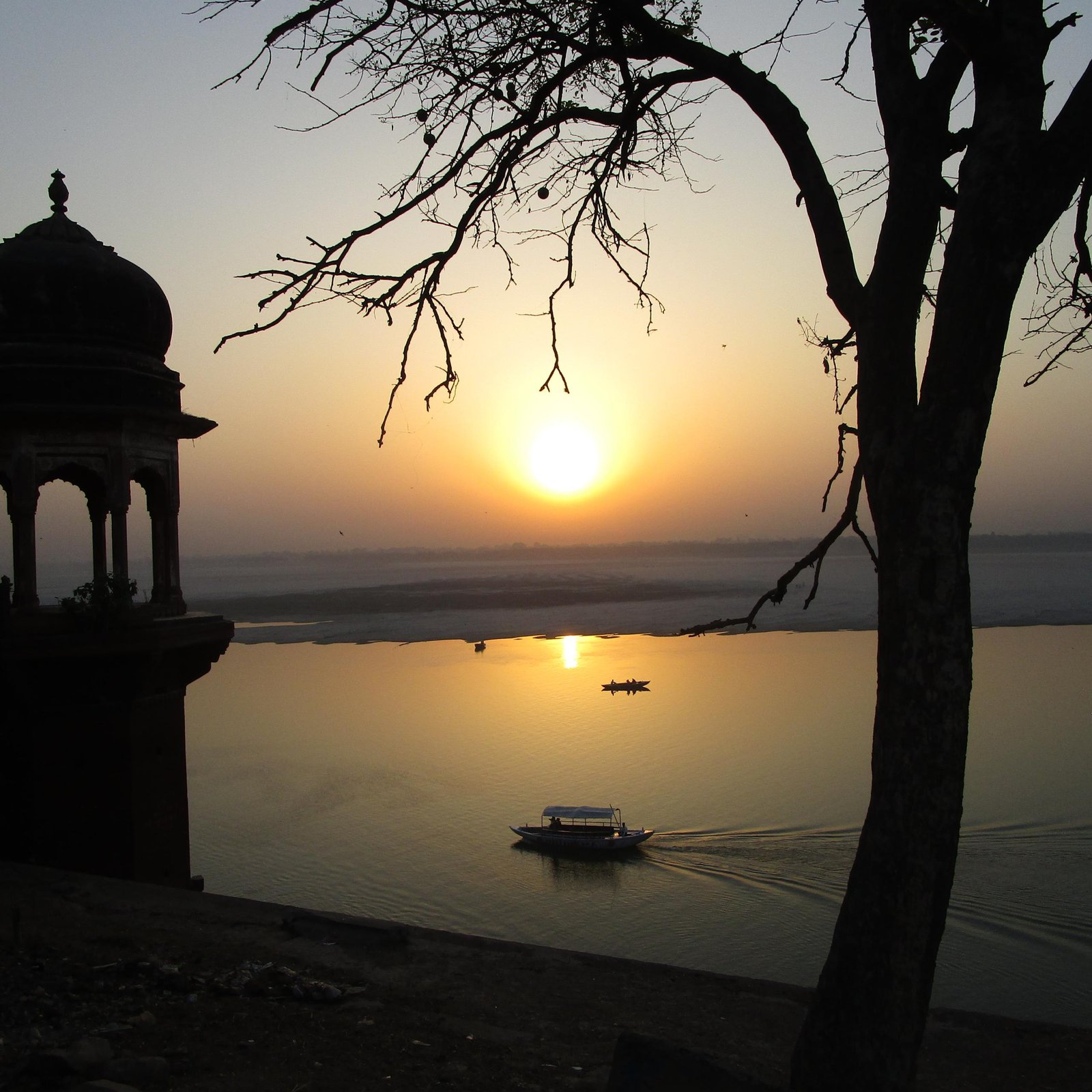
That complexity is one reason the craft deserves to be approached as living culture rather than souvenir culture. To see handloom well is to see Varanasi not only as a city of temples and ghats, but also as a city of patient making.
A good handloom experience in Varanasi should leave you with more than an item. It should leave you with a changed sense of what craft, labor, and cultural memory actually feel like up close.