
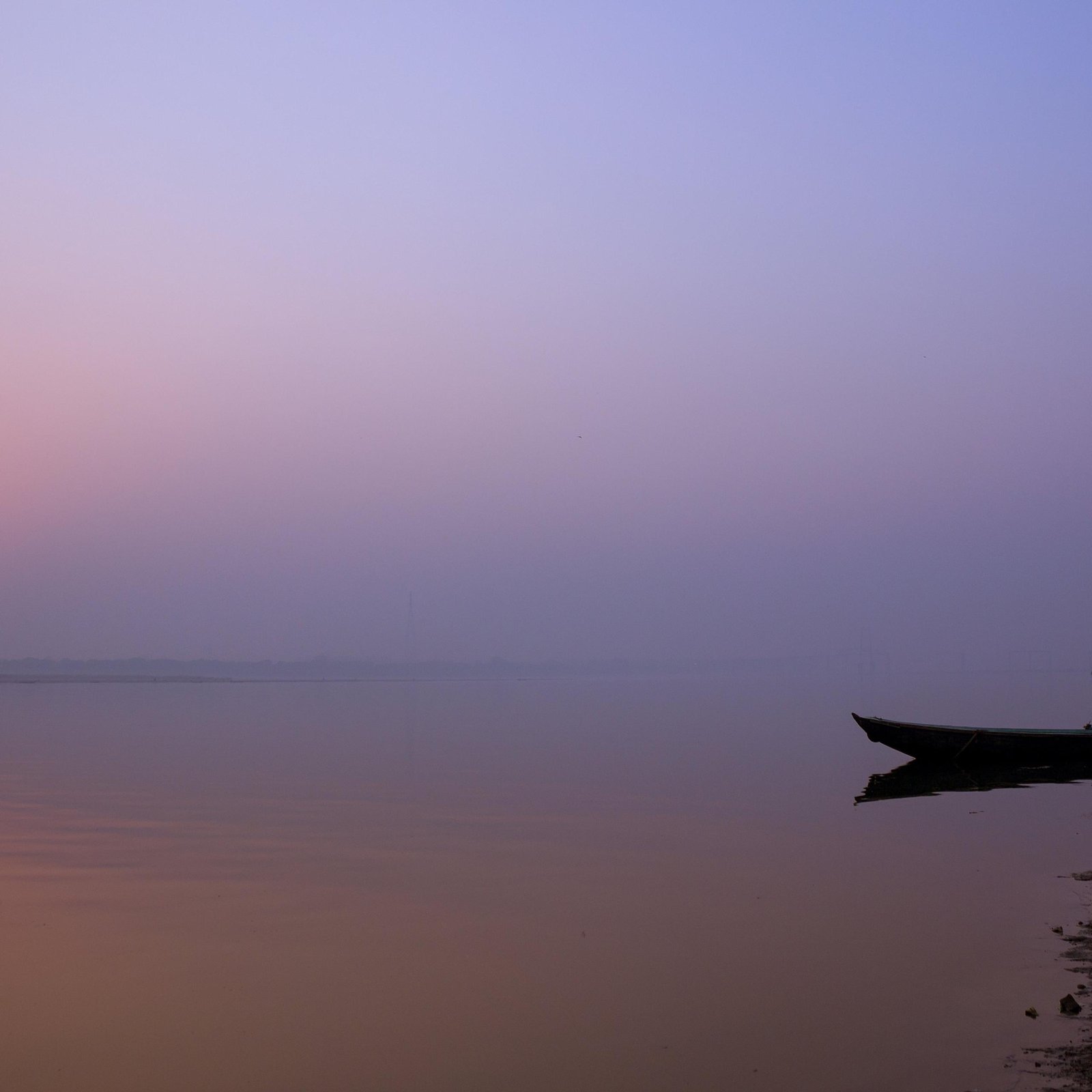

Before sunrise, Varanasi feels less like a city making an argument and more like a city breathing.
The river is still dark enough to hold the last of the night. Boatmen move in outlines rather than full faces. Bells ring, but not yet with the insistence of the later morning. A tea fire starts somewhere behind the steps. A priest arranges what he will need. Someone descends quietly to the water without an audience. Even the dogs seem to occupy the ghats with a softer claim.
This is one of the reasons dawn changes how you experience Varanasi. At first light, the city is not yet demanding interpretation. It has not fully turned toward visitors, cameras, traffic, or afternoon opinion. You are meeting a rhythm before you are meeting a performance.
The City Before It Is Fully Awake
So much of Varanasi is experienced through intensity. Crowds. Sound. Ritual. Smoke. Movement. The city is often introduced through its most concentrated public moments, as though force is the only language it knows. But dawn complicates that impression. It shows another grammar altogether.
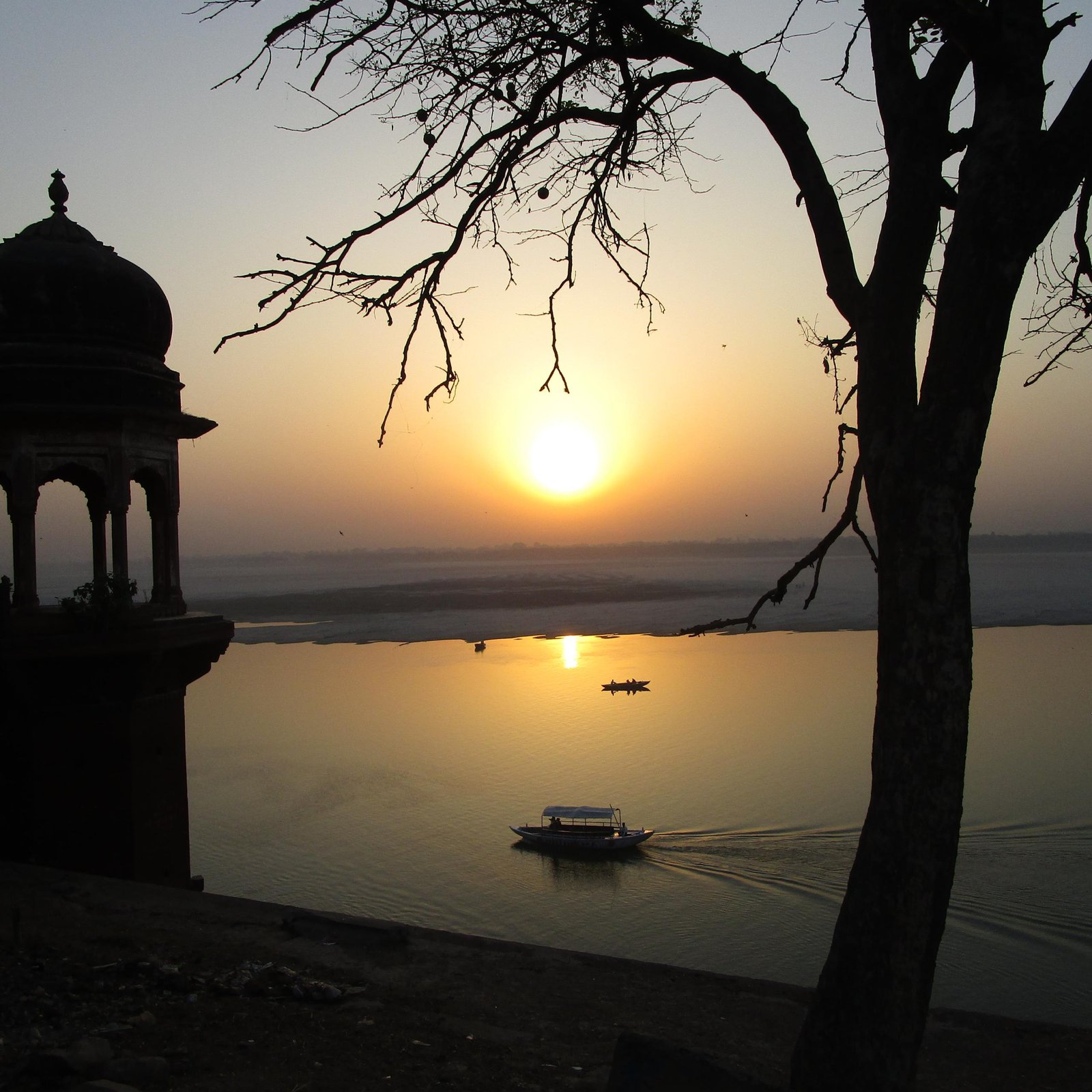
Morning does not erase the city’s depth. It reveals it differently. The ghats are still active, but the activity has more space around it. A bather entering the river is no longer one figure among hundreds. A chant carries farther because there is less competition for the ear. The horizon of the Ganga appears wider. You begin to notice sequence: flame, footsteps, oars, cloth being wrung, a second bell, birds cutting across pale sky.
In that quieter interval, Varanasi becomes easier to receive with attention rather than haste. And attention changes everything.
Why the River Matters More in the Morning
A city on a river is never only a city of buildings. It is also a city of edges, crossings, reflections, and changing light. In Varanasi, the river is not background scenery. It is one of the main ways the city becomes intelligible to the body. Dawn is when that becomes easiest to feel.
Later in the day, the river can be seen too quickly. It becomes a photograph, a route, a viewpoint. But in the morning, it still has the power to slow the eye. The water receives color gradually. Boats move through a subdued field rather than a bright spectacle. The opposite bank holds its distance. The city behind you wakes in layers, and because of that you begin to feel not only where you are, but how the place is arranged.
This is especially true if you are on the river itself. A morning boat ride is not simply a scenic activity. It is a change of orientation. The ghats cease to be only individual stops. They become a long unfolding edge, each with a mood, a function, a temperature of attention.
Ritual Without Rush
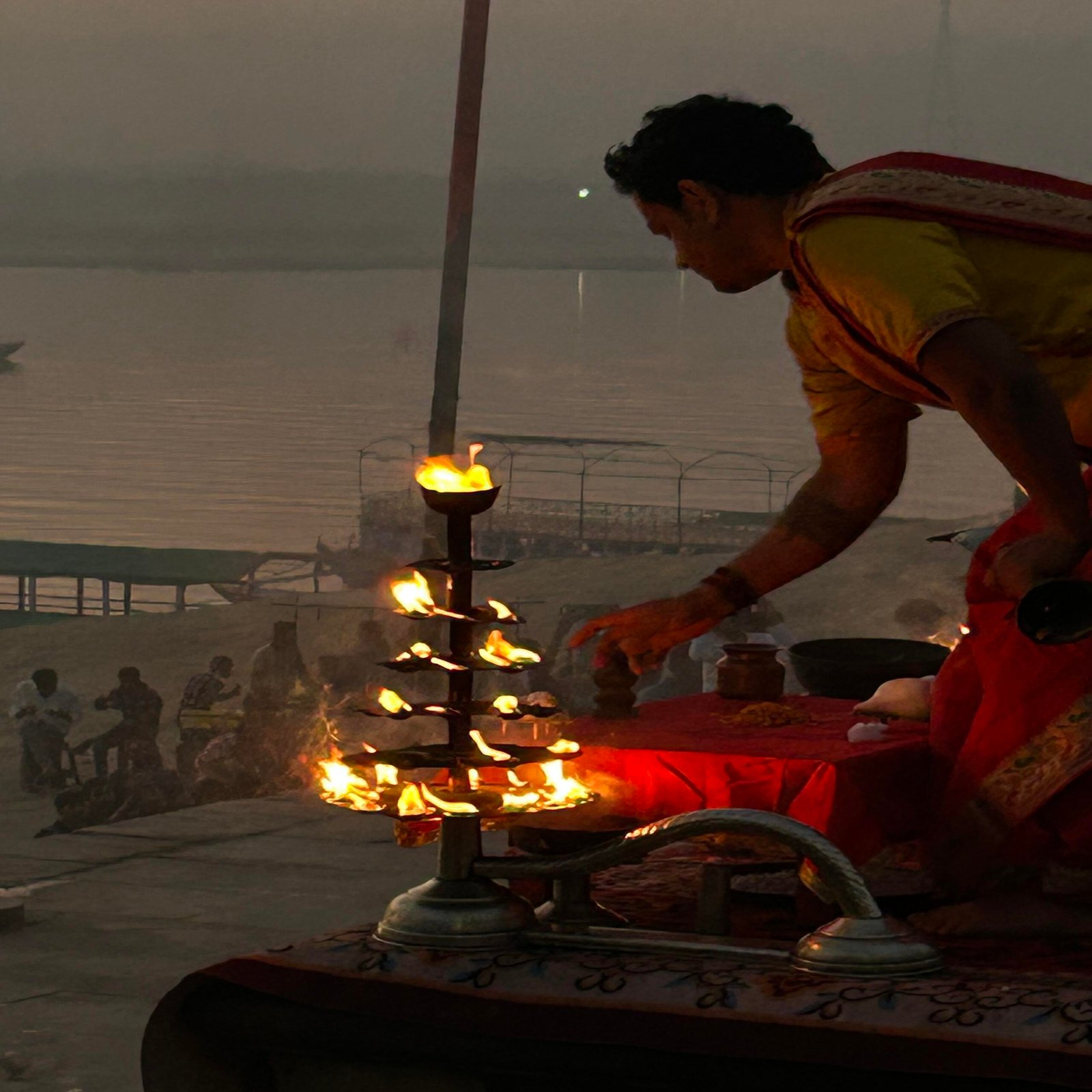
Dawn also changes the emotional tone of ritual. This matters because many visitors to Varanasi arrive eager to witness something sacred, but not always prepared to notice how differently sacred space behaves at different times of day.
Morning rituals often feel less declarative. There is devotion, but it has not yet become amplification. A gesture with water, a whispered mantra, a lamp, a handful of flowers, someone sitting a little apart and watching the river without doing anything at all. The sacred is there, but it is close to the ground. It has not yet clothed itself in public intensity.
For many travelers, this is when the city becomes more approachable. The body relaxes. You are less defensive against the crowd. You do not need to decode everything at once. Silence becomes part of the encounter rather than the absence of one.
What Dawn Gives the Walker
Walking through Varanasi in the morning is different from walking there later because the lanes themselves still seem to be becoming. Shop shutters are half-open. Sweepers are at work. A doorway is being washed. Milk is being delivered. Small shrines are lit before the neighborhood has fully entered the day. You are not walking through a finished visual field. You are walking through preparation.
That is a gift. It allows a traveler to feel the city as process rather than as display. Instead of trying to consume Varanasi as a list of famous points, you begin to feel how it moves from stillness into density. That transition is one of the city’s deepest truths.
And it leaves a subtler memory. Afternoon impressions are often strong, but they can flatten into “it was intense.” Dawn impressions stay more textured. They retain room for nuance.
A Better Beginning
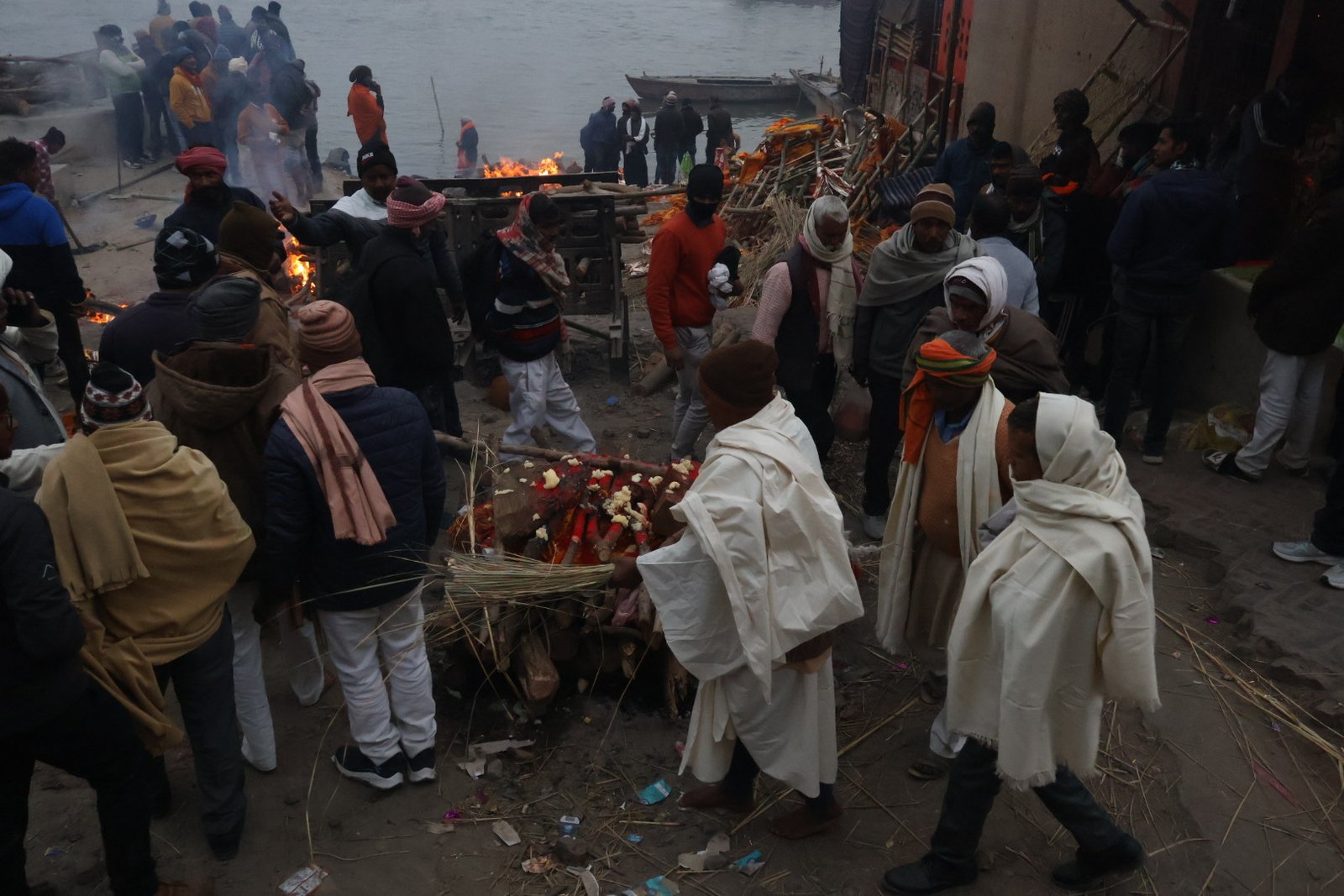
For some travelers, dawn becomes the moment when Varanasi first makes sense. Not intellectually, perhaps, but emotionally. The city stops feeling like something to “do” and begins to feel like something to inhabit, even briefly. That shift is small, but it changes the whole journey.
This is why so many meaningful experiences here begin early: a boat ride, a heritage walk, a temple route, or even a quiet hour with tea and the river. Dawn is not just a beautiful time in Varanasi. It is a better pedagogy. It teaches the pace at which the city wants to be known.
And once you have met Varanasi that way, the rest of the day carries a different tone. The crowds no longer feel like the whole truth. The noise no longer feels like the only register. Somewhere beneath the later city, you remember the earlier one still moving in low light, bell by bell, oar by oar.
If you are visiting Varanasi for the first time, beginning at dawn can radically alter the quality of your entire experience. It is not only more beautiful. It is often more honest.For readers who want a wider frame for understanding living traditions, UNESCO’s work on Intangible Cultural Heritage offers a useful starting point.
0 Comment